RMS Rainwater Treatment Options
With more than 25 years of dedicated experience in rainwater harvesting, RMS has developed a proven, effective approach to treating captured rainwater for reliable reuse. Drawing on decades of system design, field performance data, and real‑world installations, we’ve identified the essential components and treatment processes required to consistently achieve high water‑quality outcomes.
Our engineered solutions combine practical, multi‑stage filtration with robust disinfection strategies to ensure system efficiency, long‑term reliability, and stable performance across a wide range of applications. From commercial and industrial reuse to high‑purity needs, RMS systems are designed to integrate seamlessly with project requirements.
For projects requiring elevated water quality, we also offer potable‑grade, NSF‑compliant treatment systems, engineered to meet rigorous regulatory and safety standards.
RMS system designs emphasize reliability, maintainability, and verifiable performance, providing end‑users with stable water quality, predictable lifecycle costs, and long‑term operational integrity.
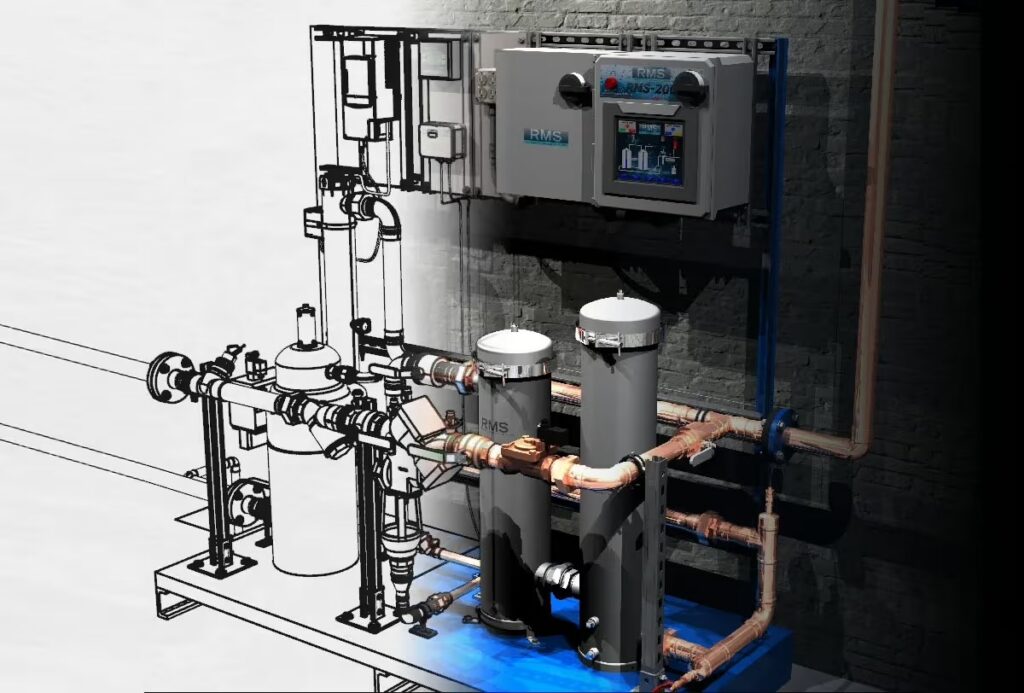
RMS Standard Treatment Skids are U.L. 979 Certified: UL Standard for Safety Water Treatment Assemblies
Basis of Design
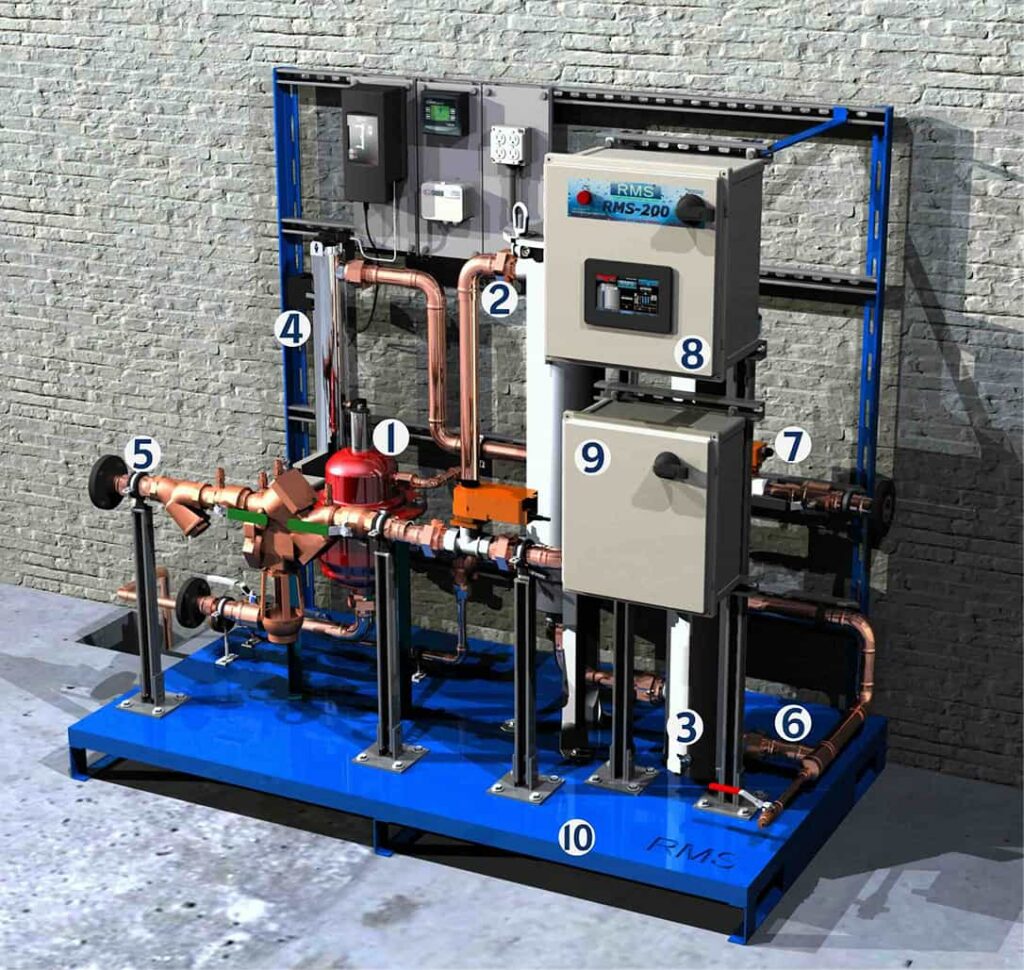
- Automatic Self-Cleaning Filtration for large particulates
- Fine sediment filtration
- Carbon Filtration to reduce discoloration and odor
- Ultraviolet Light as disinfection method
- Domestic Backup Connection for continuous water supply if rainwater is depleted
- Pressure Differential Transmitters for filtration maintenance alarm
- Flow Meter to monitor flow rate and totalized flow
- RMS Controller UL Listed PLC with graphical interface suitable for BAS communication
- Single Point Power Disconnect Panel for emergency discontinuation of power
- RMS Skid is powder coated carbon steel, various piping materials available upon request
Additional Treatment Options
RMS offers a range of optional treatment equipment designed to enhance water quality and address specific project requirements. These advanced solutions include ozone treatment for chemical-free disinfection, chemical injection for pH adjustment and oxidation, ultrafiltration for removing fine contaminants, reverse osmosis for eliminating salts and impurities, and special media filtration for targeted treatment of particulates and odors. Each method is tailored to handle unique water conditions, ensuring optimal performance and sustainability for rainwater, stormwater, and greywater reuse applications.
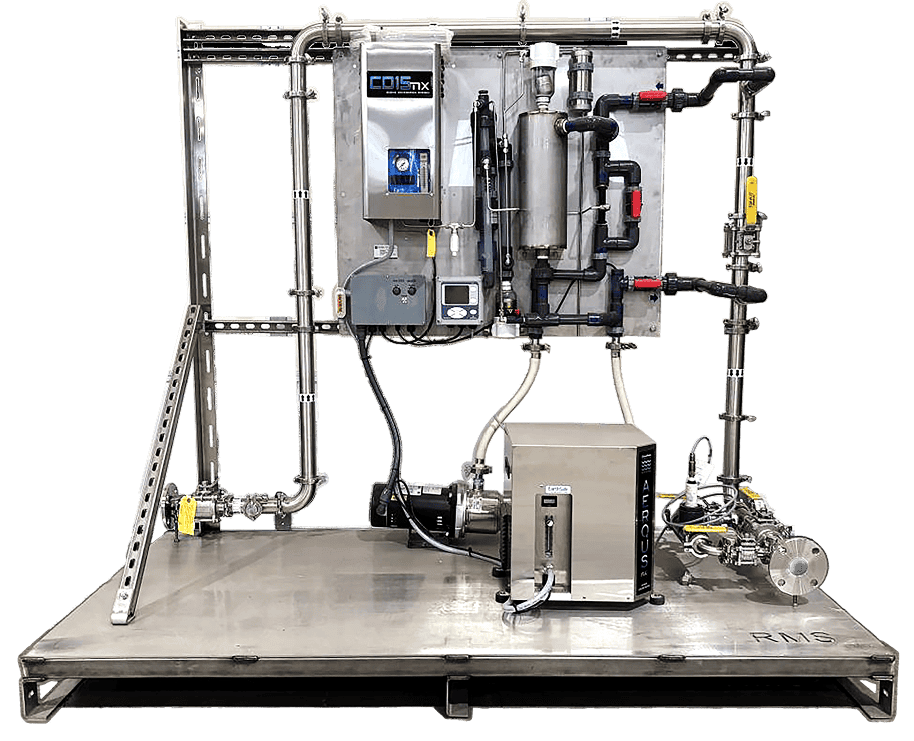
Ozone
Ozone water treatment injects ozone (O3) directly into the water to breakdown bacteria, viruses, and organic materials. This is a chemical-free method with no harmful residues that can handle a wide range of contaminants.
Chemical Injection
Chemical injection is used for applications such as disinfection, pH adjustment, oxidation, and coagulation. An injection pump introduces the selected chemical at the required rate (GPH/GPM) and pressure to ensure the desired concentration. Typical disinfecting chemicals used for water treatment are chlorine, chloramine, and chlorine dioxide.
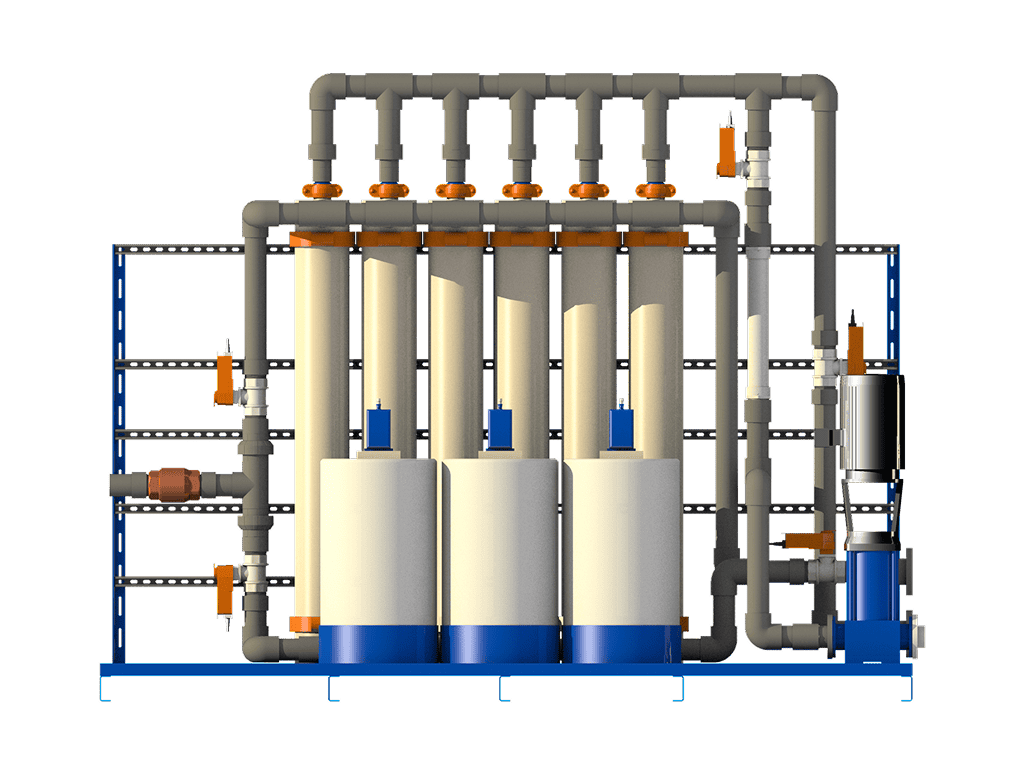
Ultrafiltration
Ultrafiltration uses semi-permeable membranes to filter the water under pressure and remove contaminants 0.02 to 0.1 microns. This method of treatment is recommended when a particularly high concentration of organic material is present in the water, e.g. when collecting from a green roof.
Reverse Osmosis
Reverse osmosis (RO) uses a semi-permeable membrane under high pressure to remove contaminants. This method can reduce salts, bacteria, and other contaminants from the water. RO systems require pretreatment such as water softeners (where applicable) and carbon filters to reduce fouling of the membranes. This method produces reject water with a high concentration of contaminants that must be properly managed. RO is recommended when salt must be removed, e.g. when reusing rainwater from parking lots that are treated during winter months.
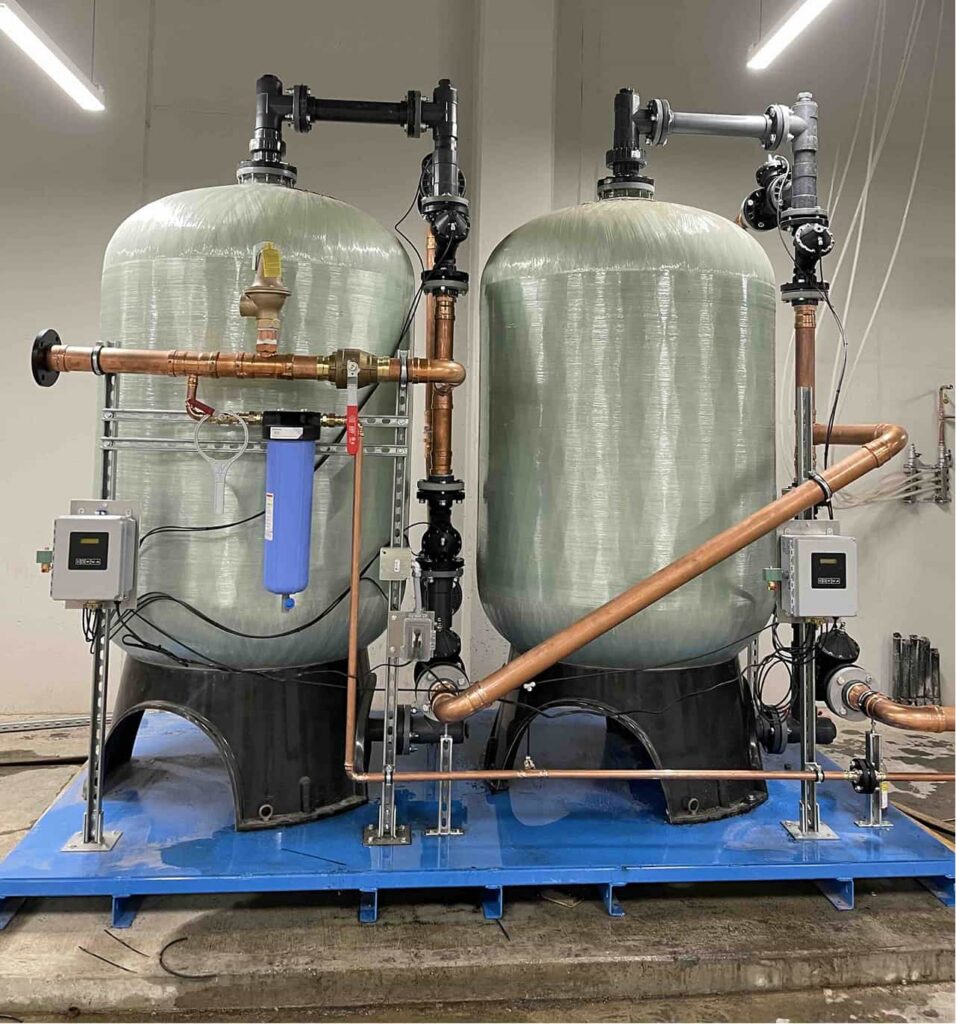
Special Media Filtration
Media filtration entails a wide variety of treatments such as sediment filtration via mechanical removal and ion exchange on a molecular level. Treatment strategies will depend on the targeted contaminants. Some examples of common media filtration for rainwater, stormwater, and greywater reuse are activated carbon, sand filtration, and Zeolite media filters. Reducing particulates along with odors is typically a target for a well-functioning system. Other media filtration examples are water softeners, green sand media filters, and Birm filters.
Explore Our Resources
Explore our technical expertise through our resource library of technical files & drawings.
Learning Center
Learn more about rainwater harvesting through our blogs, articles, workshops, and more.