Rainwater harvesting is the practice of collecting and storing precipitation from roof surfaces for later use. The benefits of rainwater harvesting span water conservation, environmental protection, energy efficiency, and long-term cost reduction. For homeowners, businesses, and municipalities facing increasing pressure on traditional water supplies, these advantages make rainwater collection a practical and measurable improvement to how a property manages water.
This article covers the primary reasons to harvest rainwater, organized by category, along with answers to the most common questions people have before committing to a system.
Article Contents
Why Collect Rainwater
Water Conservation Benefits
Environmental Benefits
Energy Savings
Financial Benefits
Additional Advantages
Frequently Asked Questions
10 Key Benefits of Rainwater Harvesting
- Reduced demand on municipal water supplies
- Lower water bills for irrigation, toilet flushing, and other non-potable uses
- Drought and supply disruption resilience
- Decreased stormwater runoff volume and velocity
- Reduced soil erosion on slopes, embankments, and stream banks
- Improved water quality in local rivers, lakes, and streams
- Lower energy consumption associated with water treatment and distribution
- Eligibility for green building certifications including LEED, SITES, and Living Building Challenge
- Reduced pressure on shared stormwater and water supply infrastructure
- Supply independence for non-potable uses during drought conditions or water restrictions
The sections below cover each of these advantages in detail.
Why Collect Rainwater
The simplest answer is that rainwater is a free, renewable resource that falls directly onto your property. Every gallon captured and used on-site is a gallon that does not need to be extracted, treated, pumped, and billed through a municipal system. At the same time, it is a gallon of stormwater that does not enter the drainage system as runoff.
The reasons to harvest rainwater vary by application. Residential systems commonly supply irrigation, toilet flushing, laundry, and in fully treated configurations, potable use. Commercial and agricultural systems can offset substantial portions of operational water demand. At the municipal and planning level, distributed rainwater harvesting reduces strain on stormwater infrastructure during high-intensity rain events.
None of these advantages require a large or complex system. Even modest collection setups produce measurable reductions in water demand and runoff volume.
Financial Benefits of Rainwater Harvesting
Lower Water Bills
Substituting harvested rainwater for municipal supply in non-potable applications reduces metered water consumption. The actual savings depend on local water rates, household or facility water demand, and the volume of rainwater available for capture. In regions with high municipal water costs or significant irrigation demand, payback periods on system installation are measurable within a few years.
Incentives and Rebates
Many state and local governments offer financial incentives for rainwater harvesting system installation, including rebates, tax credits, and reduced stormwater utility fees for properties that demonstrate on-site capture. Incentive availability varies by location and changes over time. Checking with your local water utility and state environmental agency before installation can meaningfully reduce upfront costs.
Reduced Infrastructure Cost Pressure
At the community level, widespread rainwater harvesting reduces demand on municipal water supply and stormwater systems. This lowers the frequency and scale of infrastructure expansion and upgrade projects, the costs of which are distributed across ratepayers through water bills and taxes. Individual adoption contributes to collective cost reduction over time.
Rainwater Management Solutions offers filters, storage tanks, and post-tank treatment systems sized for residential through commercial applications.
Water Conservation Benefits of Rainwater Harvesting
Reduced Demand on Municipal Water Supplies
Every gallon of rainwater collected and used is a gallon that does not move through the municipal treatment and distribution system. For non-potable applications such as irrigation, toilet flushing, and vehicle washing, there is no technical reason that water needs to be treated to drinking standards before use. Rainwater harvesting allows those demand categories to be supplied by a local, untreated source, reserving treated municipal water for applications where it is genuinely necessary.
Preservation of Local Water Sources
In regions where groundwater, rivers, or reservoirs supply the municipal system, high demand periods create measurable drawdown on those sources. Distributed rainwater harvesting reduces aggregate demand, which has a direct effect on the rate at which local water bodies and aquifers are depleted. This is most significant in arid and semi-arid climates, but the principle applies wherever municipal supply depends on finite or seasonally constrained sources.
Drought Resilience
Properties with storage capacity maintain access to water during drought conditions or supply disruptions. For agricultural users and rural properties on well systems, this buffer is particularly valuable during extended dry periods when groundwater levels drop and well yields decline.
Environmental Benefits of Rainwater Harvesting
Reduced Stormwater Runoff
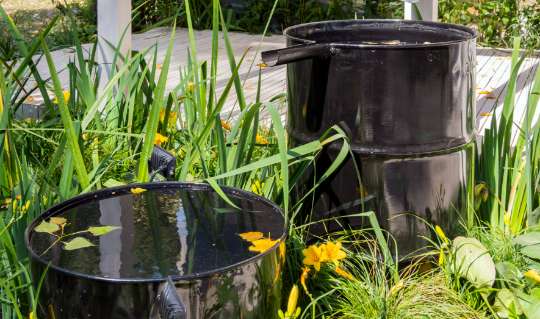
Impervious surfaces including rooftops, driveways, and paved areas prevent natural infiltration and concentrate precipitation into fast-moving surface runoff. That runoff carries sediment, fertilizers, petroleum compounds, and other pollutants from the surface directly into storm drains and local waterways. Rainwater harvesting intercepts that flow before it becomes runoff, reducing both the volume and velocity of water entering the drainage system.
Erosion Control
Concentrated stormwater runoff is a primary driver of soil erosion on slopes, embankments, and stream banks. By capturing roof runoff and either storing it or directing it to infiltration areas, harvesting systems reduce the volume of water moving across the surface and the erosive force it carries.
Improved Water Quality in Local Waterways
Reducing the volume of surface runoff entering rivers, lakes, and streams directly reduces pollutant loading in those water bodies. Cleaner inflows support aquatic ecosystems by maintaining oxygen levels, reducing sedimentation, and limiting nutrient loading that causes algae blooms and depletes dissolved oxygen available to fish and other aquatic life.
Lower Stormwater Infrastructure Load
In dense urban areas, stormwater systems are frequently undersized relative to peak flow conditions, leading to combined sewer overflows or localized flooding. Distributed rainwater harvesting across a watershed reduces peak flow volumes, delaying and reducing the volume of water that reaches the stormwater system at any given moment. This is increasingly recognized in municipal stormwater planning as a cost-effective alternative to infrastructure expansion.
Energy Savings Advantages of Rainwater Harvesting
The energy consumed by municipal water systems is substantial. Pumping, treatment, and distribution account for a significant share of energy use at the municipal level, and that cost is passed to end users through water rates. When on-site rainwater replaces municipally supplied water, the energy associated with treating and delivering that volume is eliminated from the demand side.
Gravity-Fed Distribution
Many rainwater harvesting applications can be served through gravity-fed distribution without pumping. Irrigation systems, toilet supply lines, and outdoor spigots can all operate on gravity pressure when storage tanks are elevated appropriately relative to the point of use. Eliminating or reducing pump requirements lowers both energy consumption and maintenance costs over the system’s operating life.
Reduced Greenhouse Gas Contribution
Lower energy demand from water treatment and distribution directly reduces the associated greenhouse gas emissions. For properties and organizations tracking carbon footprint or working toward sustainability certifications, rainwater harvesting provides a quantifiable reduction in scope 2 and scope 3 emissions tied to water use.
Frequently Asked Questions About the Benefits of Rainwater Harvesting
What are the main benefits of rainwater harvesting?
The primary advantages of rainwater harvesting are reduced municipal water demand, lower water bills for non-potable applications, decreased stormwater runoff, erosion control, and lower energy consumption associated with water treatment and distribution. Systems designed for irrigation and toilet supply produce the most measurable impact relative to installation cost for most residential users.
Why collect rainwater instead of relying on municipal supply?
Municipal water is treated to drinking standards regardless of how it will be used. Toilet flushing, landscape irrigation, and vehicle washing do not require potable water. Collecting rainwater for those purposes eliminates the energy and cost associated with unnecessarily treating and delivering water that does not need to meet that standard. It also provides supply independence during drought conditions, restrictions, or service disruptions.
Is rainwater harvesting worth it financially?
For most properties with meaningful irrigation demand or in areas with higher water rates, yes. The combination of direct utility savings, potential incentive payments, and reduced stormwater fees in some municipalities can produce a positive return within a reasonable timeframe. The break-even point depends on system size, local water cost, and annual rainfall. A properly sized system avoids oversizing costs while capturing the majority of available roof runoff.
Does rainwater harvesting actually help the environment?
Yes, in two direct ways. It reduces the volume of stormwater runoff entering local waterways, which lowers pollutant loading and erosion downstream. It also reduces energy demand from the municipal water system, which lowers associated emissions. Both effects are proportional to the volume of water captured and used, meaning larger systems with consistent use produce greater environmental benefit.
What can harvested rainwater be used for?
Non-potable applications include irrigation, toilet and urinal flushing, laundry, vehicle washing, and cooling tower supply. Potable use requires post-tank filtration and disinfection and is subject to local regulations. Most residential systems target irrigation and toilet supply, which together account for a large portion of household water demand.
Start Collecting Rainwater with Rainwater Management Solutions
Rainwater Management Solutions designs and supplies complete rainwater harvesting systems for residential, commercial, and agricultural applications. If you are evaluating a new system or expanding an existing one, our team can help you size the right components for your collection area, end uses, and budget.
Explore our rainwater harvesting systems and components, or contact us to discuss your project.