Rainwater Storage Options
A comprehensive guide to selecting the right rainwater storage system for your home, business, or industrial site.
Rainwater storage tanks—also known as cisterns, vessels, or collection tanks—play a vital role in harvesting rainwater for later use. They serve residential properties, commercial buildings, agricultural businesses, and industrial facilities with equal importance. Rainwater Management Solutions partners with leading manufacturers nationwide to provide one of the widest selections of above‑ground and below‑ground tanks available today.
Storage Matters
Modern water needs vary greatly across industries, climates, and project types. A tiny home might require a potable‑rated, compact tank, while a manufacturing site might require large non‑potable reservoirs capable of supporting irrigation or process reuse. Understanding these needs helps ensure the system you install is efficient, safe, and future‑ready.
Key Factors to Consider Before Choosing a Tank
Every project is unique, but most system designers should evaluate the following:
1. Capacity Requirements
Tank size depends on your roof catchment area, average rainfall, usage patterns, and water demand (irrigation, toilets, laundry, etc.). RMS even offers free tank-sizing analysis to calculate the most efficient solution for your needs.
2. Filtration Needs
Your intended use—potable or non‑potable—determines whether your system needs simple sediment filtration, advanced disinfection, or a full potable‑water treatment chain.
3. Location & Accessibility
Where will the tank be placed?
- Above‑ground tanks are easier to install.
- In‑ground tanks save space and improve aesthetics.
Soil type, available excavation space, and climate play major roles.
4. Climate Considerations
Extreme cold, intense UV exposure, and seasonal rainfall patterns can influence which materials and installation depths are ideal.
5. Application Type
Residential, commercial, agricultural, and industrial uses all have very different demands and regulatory considerations.
Types of Rainwater Storage Tanks
Below is an expanded and polished version of the material‑type breakdown from the source page:
Metal Storage Tanks
Best for: Residential & business use, potable or non‑potable applications.
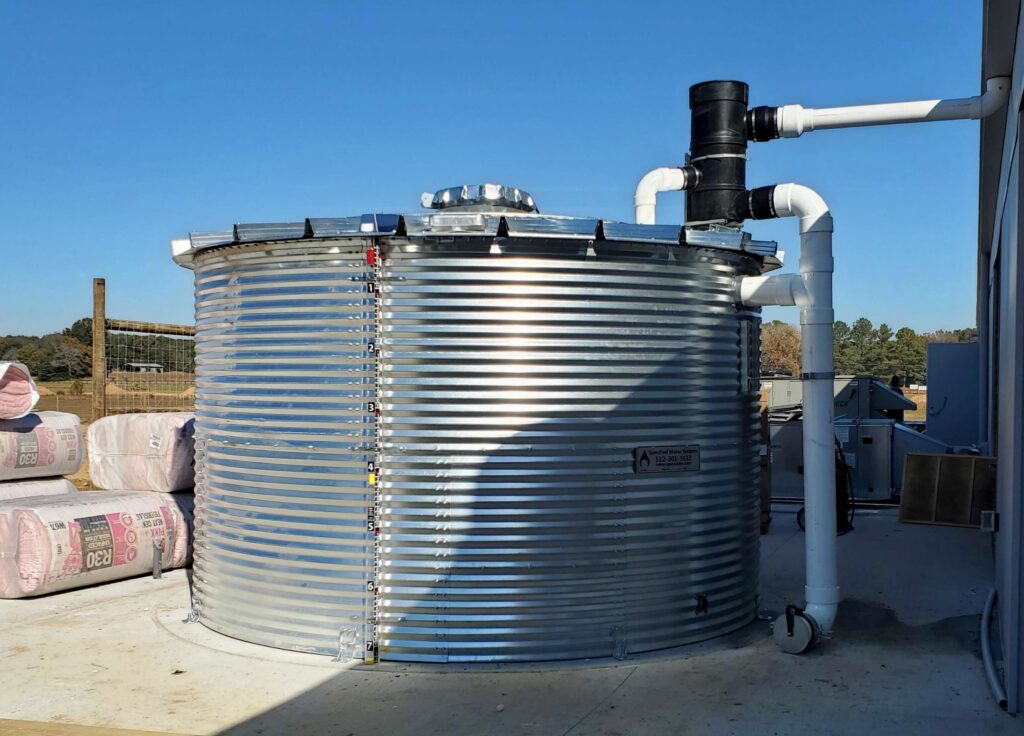
Made of corrugated galvanized metal and assembled on‑site, metal tanks are known for durability, structural strength, and longevity. A PVC liner makes them suitable for drinking water storage. Their resistance to UV degradation helps prevent bacterial growth, making them excellent for all-weather environments. Metal tanks are available in a wide range of sizes, from modest residential volumes to larger commercial capacities.
Fiberglass Storage Tanks
Best for: Large-capacity storage, commercial irrigation, agriculture.
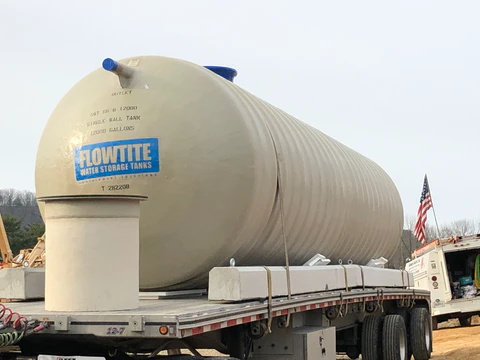
Fiberglass tanks are non‑corrosive, long‑lasting, and available in capacities from 300 to 50,000 gallons (below‑ground) and up to 20,000 gallons (above‑ground). Their strength and chemical resistance make them ideal for agricultural and large commercial reuse systems where substantial volumes of water must be stored safely. They are suitable for both potable and non‑potable uses.
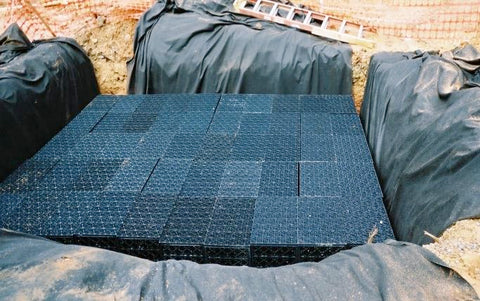
Modular Rainwater Tanks
Best for: Customizable systems, limited space, engineered site requirements.
Modular tanks offer near‑infinite configurability, allowing designers to build systems that meet specific depth, size, and load‑rating requirements. They are commonly installed below‑ground, making them perfect for projects that require low‑impact development or discreet, high‑volume storage. Their on‑site assembly makes them ideal for constrained or irregular installation areas.
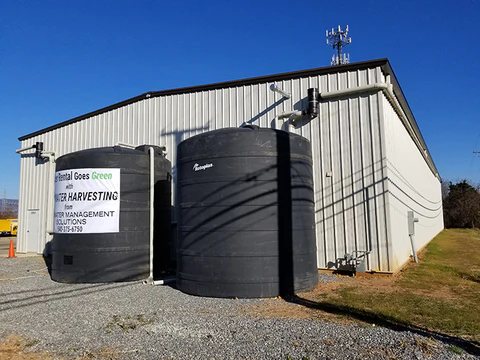
Polyethylene (Poly) Tanks
Best for: Versatile, cost‑effective storage for homes, farms, and businesses.
Polyethylene tanks come in numerous shapes, sizes, and colors. While many are designed for above-ground installation, manufacturers also produce reinforced models built for burial. They are widely used due to their affordability, availability, and durability. Poly tanks resist corrosion and can serve potable and non‑potable applications when manufactured with appropriate materials.
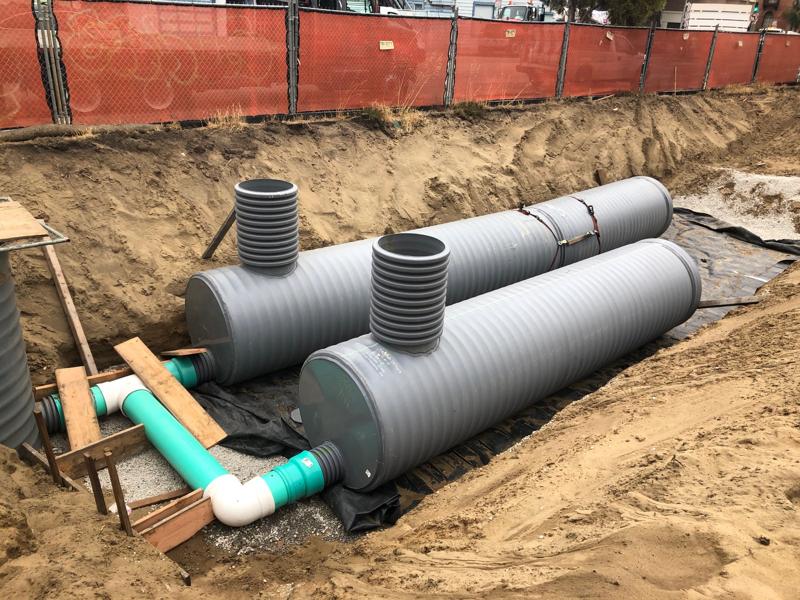
HP & HDPE Pipe Tank (High Performance & High-Density Polypropylene)
Pipe tanks are underground cistern systems built using high-performance polypropylene pipe to create a scalable, durable, and cost‑effective solution for rainwater storage and reuse. Designed to handle both water resource management and stormwater control, these systems offer exceptional structural strength, supporting H‑20 traffic loads, while remaining lightweight and easy to install. Their chemically resistant materials, customizable layouts, and virtually unlimited storage capacity make them ideal for commercial and industrial projects requiring efficient, out‑of‑sight water collection. These systems support a wide range of applications—including stormwater reuse, site runoff control, and irrigation—providing long service life with no risk of corrosion and minimal maintenance.
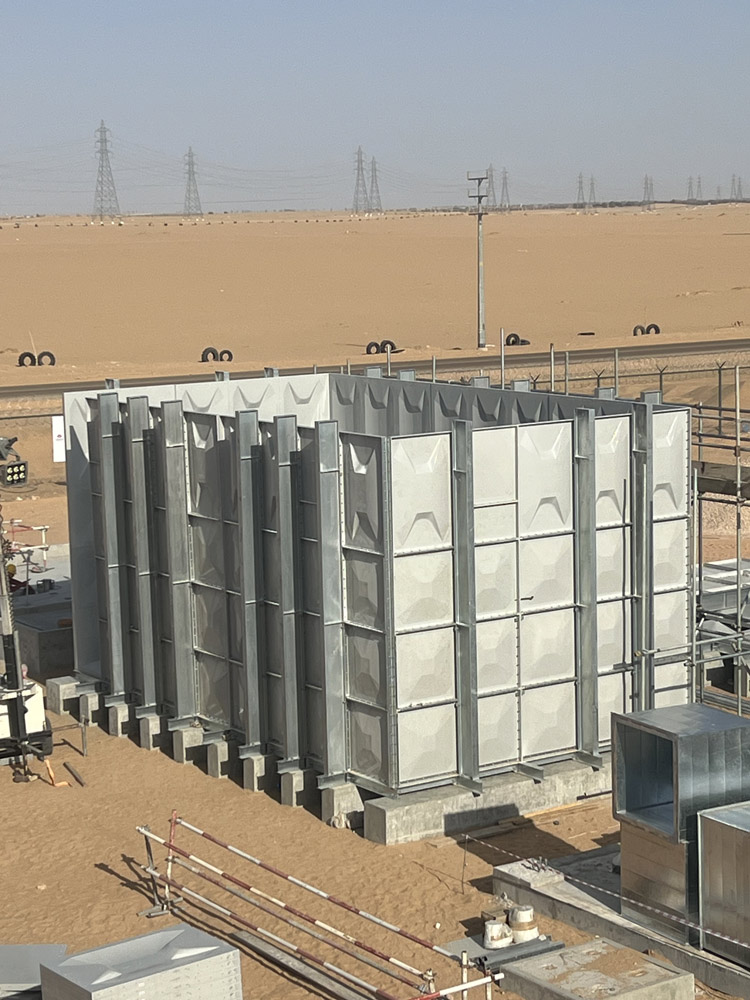
GRP Panel Tanks (Glass Reinforced Plastic Panel Tanks)
GRP modular tanks are high‑strength, lightweight water storage systems built from interlocking fiberglass‑reinforced plastic panels. Their modular, sectional design allows the tank to be transported in pieces and assembled on‑site, making them ideal for locations with limited access or projects requiring custom dimensions. These tanks offer exceptional corrosion resistance, long service life, and low maintenance, all while maintaining a smooth, hygienic interior surface suitable for various water storage applications.
Concrete Storage Tanks
Concrete storage solutions are versatile and customizable options for below-ground and above-ground storage. They can be precast or poured on-site for nearly any necessary configuration. Their weight can make precast transport a challenge, making on-site pouring a helpful alternative. In some instances, the concrete can help to stabilize water pH. Concrete storage tanks are well-insulated and long-lasting, and cistern liners can be used to optimize water quality and help prevent leaks.
Selecting Your Ideal Tank: A Streamlined Process
1. Evaluate your project’s water needs
Consider intended water use, demand, and daily consumption patterns.
2. Analyze site conditions
Review soil, available space, climate, and whether an above‑ or below‑ground system fits best.
3. Choose your material
Each tank type has unique benefits related to durability, cost, installation, and long‑term performance.
4. Size your system correctly
RMS’s free analysis tools determine optimal capacity based on daily rainfall and usage models.
5. Plan filtration and pumping
Planning appropriate filtration, disinfection, and pumping is essential when designing a rainwater system. Each application has its own water quality and pressure requirements, so selecting the right treatment equipment and properly sizing pumps ensures the system performs efficiently, reliably, and safely. A well‑engineered setup, matched to the intended end use, supports better long‑term operation and overall system efficiency.
Building a Sustainable Water Future for Commercial & Industrial Facilities
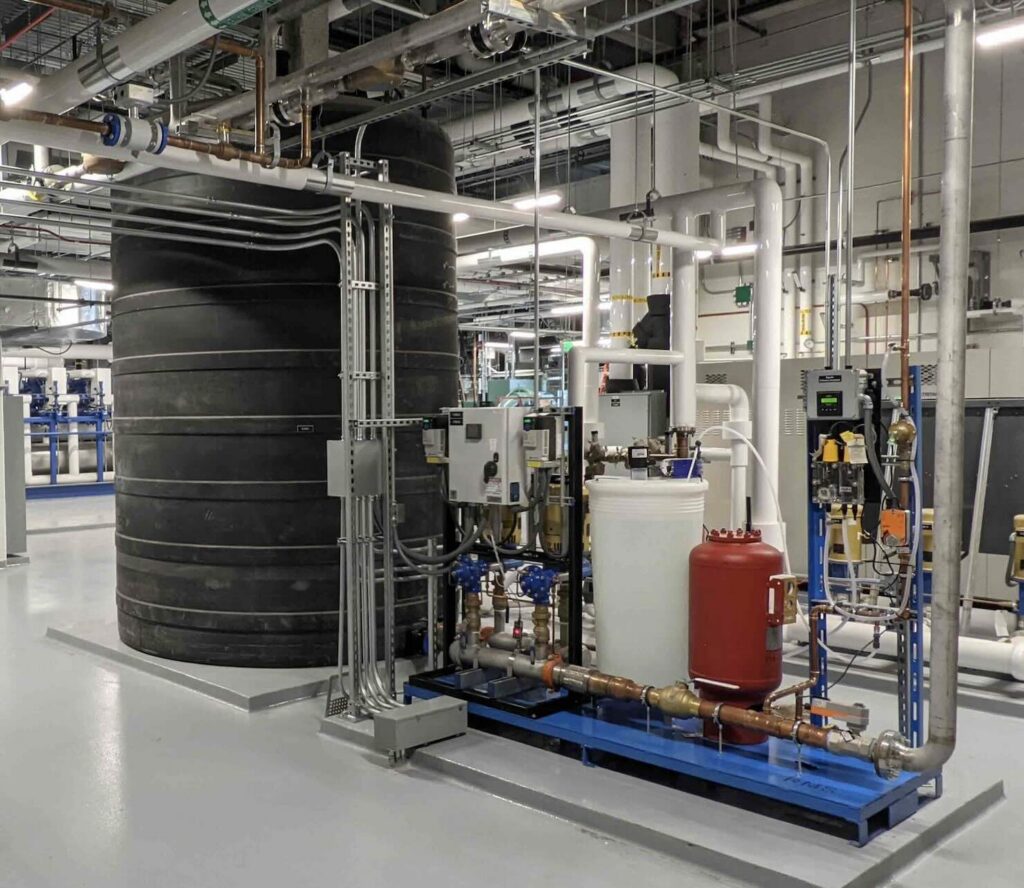
For commercial properties, industrial facilities, manufacturing sites, and large campuses, selecting the right rainwater storage system is essential for long‑term operational resilience. High‑capacity tanks support critical functions such as process water reuse, large‑area irrigation, cooling systems, equipment washdown, and stormwater compliance. By integrating an engineered rainwater storage system, organizations can reduce dependence on municipal water supplies, stabilize operating costs, and meet internal sustainability targets.
Advanced storage solutions such as metal, fiberglass, polyethylene, HDPE, and modular below‑ground systems are designed to meet the unique demands of large‑scale water capture and reuse. These options accommodate substantial volumes, support potable or non‑potable applications, and can be configured to handle site‑specific loading, depth, and capacity needs, making them ideal for complex commercial installations.
Rainwater Management Solutions provides access to a full range of commercial‑grade tanks and offers free tank‑sizing analysis, ensuring that each system is designed to maximize efficiency based on rainfall patterns, roof catchment areas, and daily water requirements. This data‑driven sizing approach helps businesses implement solutions that support both regulatory compliance and long‑term operational sustainability.
By investing in a properly engineered rainwater storage system, commercial and industrial operations can strengthen water security, reduce strain on municipal infrastructure, and operate with greater environmental responsibility—building a more resilient future for their facilities and the communities they serve.
Explore Our Resources
Explore our technical expertise through our resource library of technical files & drawings.
Learning Center
Learn more about rainwater harvesting through our blogs, articles, workshops, and more.